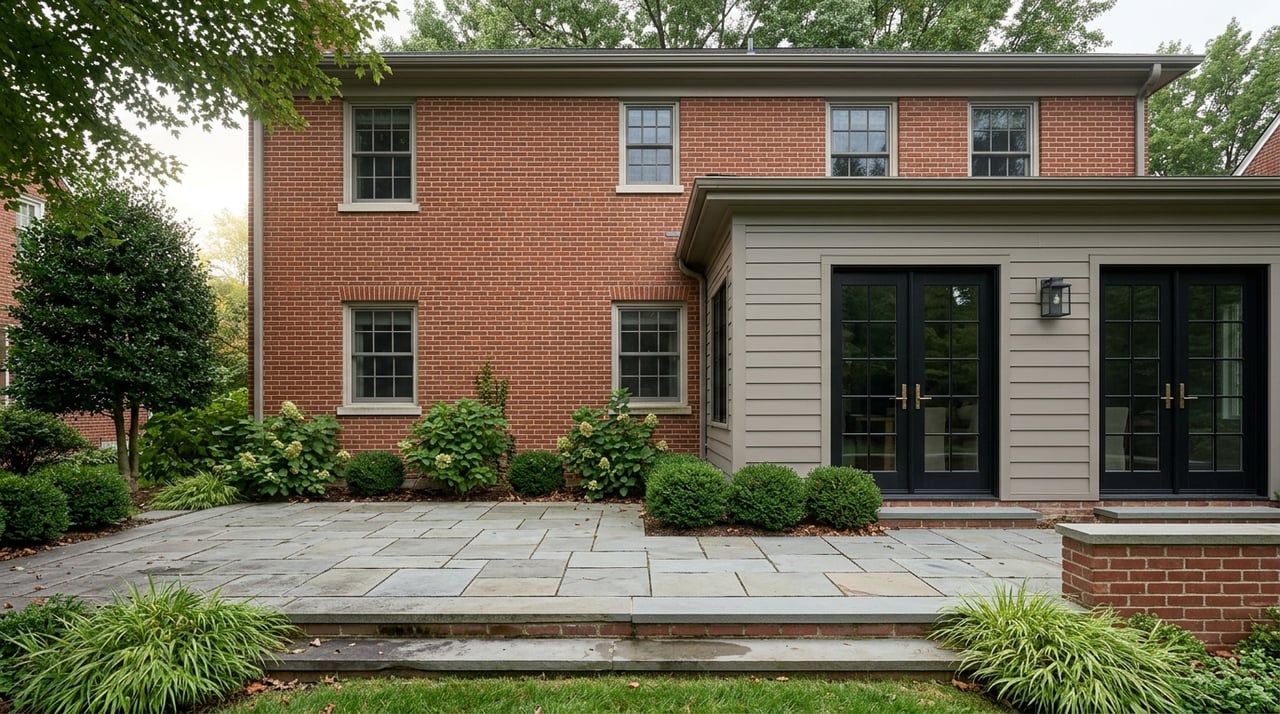
Thinking about buying your next home before selling your current one in AU Park can feel like trying to hit a moving target. In a neighborhood where homes can move fast and competition is real, timing is not just a convenience issue. It can shape your budget, your stress level, and how strong your offer looks. The good news is that with the right plan, you can make a same-time move with more clarity and less guesswork. Let’s dive in.
Why timing matters in AU Park
American University Park is a fast-moving market by DC standards. Redfin reported a median sale price of $1,534,430 in April 2026, with homes selling in about 10 days. The same data showed a 101.7% sale-to-list ratio, with 62.3% of homes selling above list price and some hot homes going pending in about 3 days.
That pace matters if you are trying to buy and sell at the same time. Your current home may attract serious interest quickly, while your next purchase may also require a strong, clean offer. If you wait too long to plan, you can end up scrambling on both sides of the transaction.
District-wide conditions add another layer. The DC Office of the Chief Financial Officer reported in February 2026 that higher mortgage rates had slowed existing home sales, active listings remained exceptionally limited, and closed sales in late 2025 were near the lowest level in more than a decade. In plain terms, inventory is still tight, so you should not count on a long shopping window.
Start with your financial picture
Before you choose a strategy, get clear on what you can comfortably afford. A same-time move usually comes down to one key question: can you carry some overlap between homes if needed? Your answer will help determine whether selling first, buying first, or using a short overlap makes the most sense.
A preapproval letter should come early in the process. According to the CFPB, preapproval helps show sellers that you are likely to qualify for financing. It also gives you a more realistic sense of your price range and how much flexibility you have if your sale and purchase do not line up perfectly.
It is also smart to estimate your net proceeds before you list. In DC, transfer and recordation taxes can take a meaningful bite out of your sale proceeds and purchase budget. If you are moving up in price, those costs can affect your down payment strategy and your comfort level with overlap.
Sell first: the lower-risk path
For many homeowners, selling first is the most conservative option. The CFPB notes that if you want to move, you normally try to sell your current home before buying another one. The biggest benefit is simple: you reduce the chance of carrying two housing payments at the same time.
In AU Park, that approach can work well if your home is likely to show strongly and attract buyers quickly. It can also give you a firmer budget for your next purchase because you know your sale price, your proceeds, and your timeline. That clarity can make your next move feel much more manageable.
The tradeoff is timing. If your home sells quickly, you may need to move faster on your purchase or line up a temporary plan between homes. That is why selling first works best when you prepare your home thoroughly before it hits the market.
When sell-first makes sense
A sell-first strategy may fit if:
- You want to avoid the stress of two mortgage payments
- You need sale proceeds for your next down payment
- You want a clear budget before writing offers
- You prefer a more predictable risk profile
Buy first: useful, but not for everyone
Buying first can be attractive if you want more control over where you are going next. It can help if you do not want to feel rushed into a purchase after your current home goes under contract. In a competitive market, it may also let you focus on writing a stronger offer without waiting for your sale to close.
Still, this strategy usually requires more financial flexibility. You may need enough cash reserves, available equity, or lender support to handle a short period of overlap. Without that cushion, buying first can create real pressure.
In AU Park, where competitive conditions can make contingency-heavy offers less appealing, buy-first strategies can sometimes improve your position. But this only works if the numbers truly support it. You should decide based on your finances, not just on the hope that everything will line up smoothly.
When buy-first makes sense
A buy-first strategy may fit if:
- You have substantial equity in your current home
- You have savings to manage temporary overlap
- Your lender confirms you can carry both obligations
- You want to avoid moving twice or using temporary housing
Short overlap can ease the transition
You do not always have to choose between a hard sell-first or buy-first path. In many cases, a short overlap can make the move more manageable. That might mean closing on your sale and staying in the home briefly under a written post-closing occupancy agreement, sometimes called a rent-back or leaseback.
This can buy you time for packing, moving, and closing on the next home. NAR notes that post-closing possession agreements should be in writing, should account for insurance, and should have lender approval. Many lenders will not accept leaseback agreements longer than 60 days, so this is best viewed as a short-term tool, not a long-term solution.
For AU Park sellers, a short rent-back can be especially helpful when your home is likely to sell fast but your purchase timeline is close behind. It can reduce moving-day stress without forcing a rushed decision.
Equity tools that can bridge the gap
If you want to buy before your current home sells, your equity may help. Several financing options can provide temporary access to cash for a down payment, closing costs, or short-term overlap. Each one works differently, and each comes with risk.
HELOC
A home equity line of credit, or HELOC, lets you borrow against available equity as needed. The CFPB describes it as a revolving line of credit secured by your home. It can be flexible, but if you cannot keep up with payments, you could put your home at risk.
Home equity loan
A home equity loan gives you a lump sum rather than a revolving line. It is also secured by your home and is often structured with a fixed rate. This can be useful if you know exactly how much you need for the next purchase.
Cash-out refinance
A cash-out refinance replaces your current mortgage with a larger one and gives you the difference in cash. This can work if the math still makes sense after replacing your existing loan. It is worth reviewing carefully, especially in a higher-rate environment.
Bridge loan
A bridge loan is designed for short-term timing gaps. CFPB regulations describe bridge loans as temporary loans with a maturity of 12 months or less, including loans used to finance a new home when the borrower plans to sell the current home within 12 months. If the right house comes up before your current one closes, this is often the clearest tool to discuss with your lender.
Prep your home before it goes live
In a same-time move, every day matters. The faster your home is ready to list and sell, the easier it is to coordinate the next step. That is why seller preparation should happen before your home hits the market, not after.
Staging can make a measurable difference. In NAR’s 2025 staging report, 83% of buyers’ agents said staging made it easier for buyers to visualize a property as a future home. The report also found that 29% of sellers’ agents saw a 1% to 10% increase in the dollar value offered, while 30% reported a slight decrease in time on market and 19% reported a significant reduction.
In AU Park, where some homes go pending in about 3 days, preparation is not optional if your goal is a smoother move. Decluttering, light repairs, staging, and professional photography are all part of reducing overlap stress. The more market-ready your home is on day one, the more control you may have over timing.
Focus on the highest-impact prep
If you are trying to buy and sell at the same time, prioritize:
- Decluttering and simplifying each room
- Completing light repairs before listing
- Staging key spaces like the living room, primary bedroom, dining room, and kitchen
- Scheduling professional photography before launch
- Pricing strategically for current AU Park conditions
Watch the local tax details
One of the easiest parts of a same-time move to underestimate is closing cost math. In DC, the Office of Tax and Revenue says the deed recordation tax and deed transfer tax are each 1.1% for residential transfers under $400,000 and 1.45% on the full amount when the transfer is $400,000 or more. On higher-priced homes, that can materially affect your budget.
There is also an important DC purchase-money exemption to know. The Office of Tax and Revenue says the exemption applies when a purchase money mortgage or deed of trust is recorded at the same time as the deed conveying the property. In a tightly coordinated move, that timing can matter.
If your next home is nearby but across the line in Montgomery County, Maryland, the tax picture changes. Montgomery County states that the Homestead Property Tax Credit does not apply in the first year after a purchase, and sellers must estimate and disclose the property tax for the subsequent levy year. If you are considering a move from AU Park into nearby Maryland, that is worth factoring into your monthly-cost planning.
A simple plan for buying and selling together
If you want to reduce surprises, keep your process in this order:
- Prepare your current home for market with repairs, decluttering, staging, and photography.
- Talk to a lender early so you understand your preapproval, cash needs, and overlap options.
- Estimate your proceeds and costs including DC taxes, closing costs, and moving expenses.
- Choose your sequence based on your finances: sell first, buy first, or a short overlap.
- Build in backup options such as a rent-back, temporary housing, or an equity-based financing tool.
In a neighborhood like AU Park, the right plan is usually the one that balances timing with financial comfort. The goal is not just to make the move work. It is to make it work without unnecessary pressure.
If you are planning a same-time move in AU Park or considering a cross-border move into nearby Maryland, the right guidance can make a fast market feel far more manageable. The Rebecca Weiner Group can help you map out timing, prep your home for the market, and build a strategy that fits your next move.
FAQs
Should I sell first or buy first in AU Park?
- For many homeowners, selling first is the lower-risk option because it reduces the chance of carrying two housing payments, but buying first can work if you have enough equity, reserves, and lender support.
Can I use home equity to buy my next home in AU Park?
- Yes. Depending on your finances and lender guidance, you may be able to use a HELOC, home equity loan, cash-out refinance, or bridge loan to help cover a down payment or short-term overlap.
How can I reduce time on market when selling in AU Park?
- Preparing your home before listing is one of the best ways to reduce stress and shorten your timeline, especially through decluttering, light repairs, staging, and professional photography.
What DC closing costs matter most in an AU Park same-time move?
- DC deed transfer and recordation taxes can materially affect your net proceeds and purchase budget, especially on higher-priced homes, so they should be part of your planning from the start.
What changes if I buy near AU Park in Montgomery County, Maryland?
- If you buy in Montgomery County, the Homestead Property Tax Credit does not apply in the first year after purchase, and the county has its own property tax disclosure requirements, so your cost picture may differ from DC.
