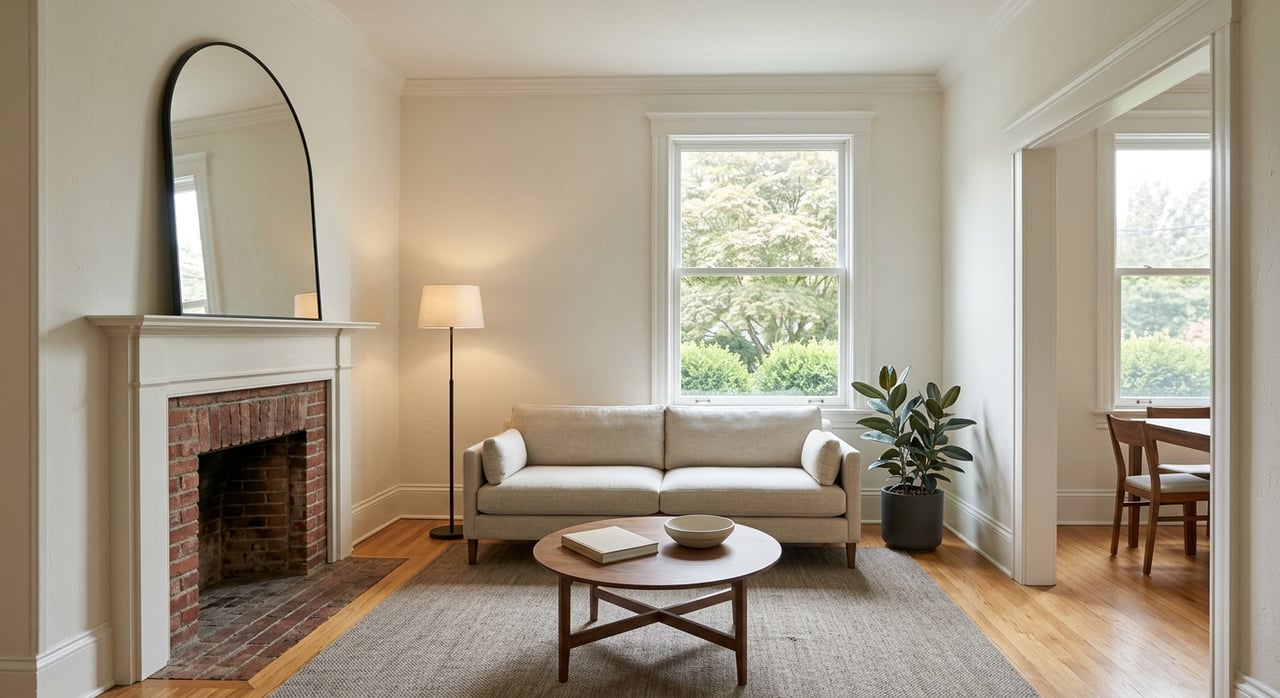
Wondering how to make a smaller AU Park home feel unforgettable to buyers? In a neighborhood where many homes share classic brick Colonial charm and compact footprints, the homes that stand out are often the ones that feel bright, easy to live in, and thoughtfully presented. If you are getting ready to sell, smart staging can help buyers focus on your home’s flow, character, and condition rather than its square footage alone. Let’s dive in.
Why staging matters in AU Park
American University Park was largely built out between the 1920s and 1940s, and many of the homes buyers see today are brick Colonials and other mid-century single-family houses on urban-sized lots. That means buyers are often comparing homes with similar exterior styles and similar lot patterns. In that setting, presentation becomes a major way to separate your listing from the competition.
Current neighborhood data shows AU Park with a high average home value and limited inventory. Even in a market with strong demand, buyers at this price point expect polished, move-in-ready presentation. Staging helps your home feel intentional, cared for, and easy to picture as someone’s next home.
Staging is not the same thing as remodeling. Its job is to highlight your home’s strengths and help buyers visualize living there. For smaller homes, that usually means creating a sense of space, light, and easy movement from room to room.
Focus on how buyers experience space
In AU Park, many homes have appealing character but more compact room sizes than newer construction. Buyers will notice the footprint quickly, so your goal is to help each room read clearly and comfortably. When your rooms feel open and functional, buyers are more likely to see the home as efficient rather than small.
This matters even more because buyers often begin with photos and virtual tours before they ever schedule a showing. According to the 2025 Profile of Home Staging, buyers’ agents said photos were especially important, along with physical staging, videos, and virtual tours. In other words, staging is not just for the open house. It also helps your home perform better online.
Stage the rooms that matter most
Not every room needs the same level of attention. The best return usually comes from focusing first on the spaces buyers care about most.
Living room first
Buyers’ agents ranked the living room as the most important room to stage. In many AU Park homes, the living room sets the tone right away because it is one of the main gathering spaces and often connects directly to the entry or dining room.
Keep furniture scaled to the room. If you have oversized sofas, extra side chairs, or bulky cabinets, consider removing some pieces so the room feels easier to navigate. The goal is to show conversation space, natural light, and clear paths through the room.
Primary bedroom next
The primary bedroom was the second-highest priority in the staging report. Buyers want this room to feel restful and functional, even if the dimensions are modest.
Use simple bedding, a tidy nightstand setup, and minimal decor. If the room is tight, you may want to remove any extra bench, chair, or dresser that makes circulation feel cramped. A calm, uncluttered bedroom helps buyers focus on comfort instead of size.
Kitchen as a key decision point
The kitchen ranked third, and in a smaller AU Park home, it can be especially important. Many buyers understand that older homes may not have oversized kitchens, but they still want the space to feel clean, efficient, and well cared for.
Clear counters as much as possible. Leave only a few purposeful items, such as a coffee setup or a bowl of fruit, if they fit the space. Clean lines, open work surfaces, and good lighting can make a compact kitchen feel much more usable.
Use a less-is-more strategy
One of the most effective staging moves for a small home is editing. Removing furniture and personal items can make a room feel noticeably larger without changing a single wall.
NAR guidance recommends removing bulky furniture, packing away personal items, keeping closets half full, and creating a clean, neutral backdrop. It also points to overcrowded rooms and neglected high-traffic areas as common mistakes. For AU Park sellers, this advice is especially useful because many homes have traditional layouts where each room needs to feel clearly defined.
What to remove before listing
Start with anything that interrupts flow or makes a room feel visually busy.
- Oversized sofas and armoires
- Extra dining chairs that are not needed
- Large personal photo collections
- Excess books, toys, and countertop items
- Rugs or furniture that chop up the room visually
- Closet overflow that makes storage look limited
When in doubt, remove one more item. Small homes usually show better when they feel edited and breathable.
Make flow easy to read
In a compact house, buyers are not only looking at room size. They are also reading how the home lives. If furniture placement blocks walkways or makes transitions feel awkward, the whole house can seem smaller.
Arrange each room so the purpose is obvious. A living room should look like a place to gather, not a storage zone or a mixed-use catchall. A dining area should feel usable without crowding adjacent spaces.
This is especially important in homes with formal living rooms, compact dining rooms, or older layouts. Buyers should be able to walk through and understand how daily life fits comfortably in the space.
Strengthen the first impression outside
For AU Park homes, the exterior often has a big impact because homes sit relatively close together and buyers may be comparing several similar facades. A tidy, intentional entry can make your home feel warm and well maintained before anyone walks inside.
NAR recommends simple touches like a front-door mat, manicured landscaping, and small potted plants. That approach works well here. You do not need elaborate design choices. You need a neat stoop, a clean porch, and an entry that feels inviting.
Easy curb appeal wins
- Sweep walks and steps
- Clean the front door and hardware
- Add a fresh mat
- Trim plantings and remove dead growth
- Use a small pair of container plants if the space allows
- Keep porches and stoops free of clutter
For a smaller Colonial or bungalow, these details support the home’s charm without trying to hide its true scale.
Prep for photos, not just showings
A staged home needs to work on camera. Buyers’ agents reported that buyers often view many homes virtually before choosing which ones to see in person, so your online presentation matters from day one.
Before photography, simplify every visible surface and check how each room reads in a still image. Balanced light, clean sightlines, and open floor space can make a dramatic difference. If a room looks crowded in photos, it will likely feel crowded to buyers too.
For AU Park sellers, this is where staging becomes a strategic marketing tool. In a neighborhood with many similar-looking homes, strong photography and thoughtful room styling can help your listing make a better first impression and earn more interest early.
Know when simple updates are enough
If you are planning ahead, it is easy to wonder whether you need to renovate before listing. In many cases, smaller homes benefit more from cosmetic improvements than major projects.
Neutral paint, fresh linens, cleaner sightlines, and exterior touch-ups are often enough to support a strong launch. DC guidance notes that interior painting, wallpapering, carpet installation, and cleaning do not require an after-hours permit, which is helpful for sellers who want low-friction prep work.
More involved projects are different. DC’s Department of Buildings says structural work and some nonstructural work can require permits, including interior remodeling, window and door replacement, porches and steps, and additions. If your home may be landmarked or otherwise historically protected, you should verify requirements before making exterior changes.
Check historic status before exterior changes
Some AU Park properties are listed as historic landmarks and are protected by DC historic preservation law. Not every home in the neighborhood has that status, but some do. If you are considering replacing windows, altering a porch, or making other exterior changes, confirm your property’s status first.
This is one reason staging is often such a smart path for sellers. It can improve presentation without creating the cost, timing, and review issues that sometimes come with renovation work. For many small homes, careful editing and cosmetic polish are enough to make a meaningful impact.
What staging can realistically do
Staging will not change your square footage, but it can change how buyers perceive the space. In the 2025 staging report, 83% of buyers’ agents said staging makes it easier for buyers to visualize a property as their future home. Some sellers’ agents also reported improvements in offered value and shorter time on market.
That matters in AU Park, where buyers often compare homes with similar architecture and neighborhood appeal. When your home feels brighter, more functional, and better prepared, buyers can connect with it faster. That connection often starts online and carries through the showing.
A practical AU Park staging checklist
If you want a simple plan, start here:
Week one: edit and declutter
- Remove bulky furniture
- Pack away personal items
- Clear countertops and open shelves
- Reduce closet contents by about half
- Define each room’s purpose clearly
Week two: refresh key spaces
- Focus on the living room, primary bedroom, and kitchen
- Update bedding, towels, and lighting if needed
- Touch up paint and clean high-traffic areas
- Improve the front entry and stoop
Week three: prep for launch
- Review each room through a camera lens
- Adjust furniture to improve flow
- Simplify decor even further if needed
- Deep clean before photos and showings
Selling a smaller home in AU Park is not about pretending it is something else. It is about showing buyers the best version of what it already is: charming, functional, and well cared for. With the right staging strategy, your home can stand out for all the right reasons.
If you are thinking about listing and want a plan tailored to your home’s layout, size, and style, the Rebecca Weiner Group can help you prepare, position, and market your property with care.
FAQs
Which rooms should sellers stage first in an AU Park home?
- Start with the living room, primary bedroom, and kitchen, since buyers’ agents rank those as the most important rooms to stage.
Does staging really help small homes in American University Park?
- Yes. Staging can help buyers visualize how the home lives, and it may support stronger offers or less time on market.
How do you make a small AU Park house look bigger?
- Remove bulky furniture, reduce clutter, keep finishes neutral, and create clear walking paths so each room feels open and easy to understand.
Should AU Park sellers renovate before listing?
- Often, cosmetic improvements like paint, cleaning, and simple exterior touch-ups are enough, especially when paired with strong staging.
Do exterior updates in AU Park ever require extra review?
- Yes. Some work may require permits, and some homes may have historic status, so sellers should confirm DC requirements before making exterior changes like window or porch alterations.
