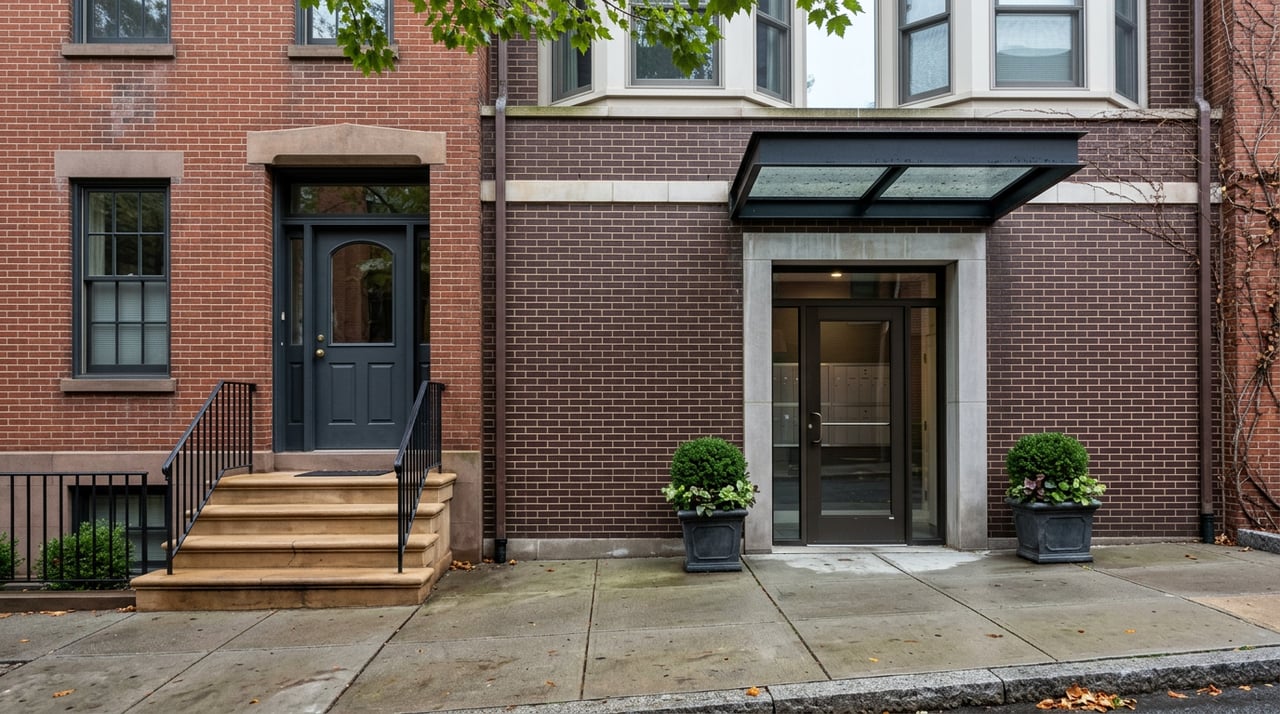
Eyeing Woodley Park for your first home? With the Red Line at your door, Rock Creek Park nearby, and a mix of classic buildings and historic rowhouses, the neighborhood packs a lot into a small footprint. As a first-time buyer, the bigger question is what fits your budget and lifestyle: a condo, a co-op, or a small rowhouse. In this guide, you’ll compare real monthly costs, financing paths, and tradeoffs so you can choose with confidence. Let’s dive in.
Woodley Park market snapshot
Woodley Park has a wide price spread. Recent public snapshots showed smaller condos selling in the low to mid six figures and larger rowhouses closing in the mid to high seven figures. Depending on the data window, neighborhood medians ranged from about $603,000 for recent solds to roughly $830,000 in value index terms, with median list prices near $944,000 at one late-2025 snapshot. The area has been somewhat competitive, with median days on market around the mid 60s and a share of homes selling above list when a listing hits right.
The takeaway: selection can be tight, and the right home can draw multiple offers. Plan ahead, know your numbers, and be ready to move when a good match appears.
Condos: flexible and lower maintenance
Price and what you get
Most Woodley Park condos are along or near Connecticut Avenue. Expect a range from the low $400Ks for smaller units to $900K+ for larger homes or amenity buildings. You’ll see a mix of boutique properties and mid to high-rise buildings.
Monthly costs to budget
Condo dues are a key line item. In D.C., dues often run several hundred dollars per month, and full-service buildings can be higher. These fees typically cover exterior maintenance, a master insurance policy, some utilities, and reserves. As Axios summarizes for condo and HOA fees, urban markets like D.C. tend to run above the national median, so include dues early in your affordability check.
Financing and resale notes
Financing is straightforward for many condos, especially if the building appears on HUD’s FHA-approved list or qualifies for Single-Unit Approval. Review HUD’s FHA condo guidance with your lender if you plan to use a low down payment. Ask for association budgets, reserves, delinquency reports, litigation disclosures, and meeting minutes early, since weak reserves or legal issues can slow or block loans.
Lifestyle and rules
Condos limit exterior maintenance and often add amenities like a staffed lobby or fitness room. Review pet, renovation, and rental rules before you fall in love with a unit. If you plan to host short-term rentals, verify city licensing requirements and the association’s policies.
Co-ops: classic buildings, different mechanics
What you buy and how you finance it
In a co-op, you purchase shares in a corporation and receive a proprietary lease rather than a deed. Financing is a share loan, and the pool of lenders can be narrower than for condos. Co-ops also require a board package and an interview, which affects timing and certainty. For a clear overview of how co-op financing and board approvals work in D.C., review the DC Cooperative Housing Coalition’s guidance.
Monthly costs and rules
Monthly co-op fees often include building-level mortgage payments, real estate taxes, staff, insurance, and reserves. That can make the monthly outlay higher than a similar-priced condo, even if the purchase price is lower. Many co-ops limit subletting and require board approval for buyers, which can add time to a resale.
Fit for first-time buyers
If you value classic architecture, plan to stay put, and do not need near-term rental flexibility, a co-op can be a compelling option. If you need quick approvals, more lender choices, or flexible renting, weigh condos or fee-simple homes instead.
Rowhouses and small houses: space and control
Price and what you get
Historic Wardman-style rowhouses and small detached or semi-detached homes close to the park often trade from about $1.2 million to $1.9 million, with recent examples above $1.6 million. You gain space, outdoor areas, and fee-simple ownership without an association.
Monthly costs to plan
You will pay D.C. Class 1 property taxes, homeowners insurance, all utilities, and you should reserve for maintenance. Review current rates on the Office of Tax and Revenue’s page. On older homes, a common planning rule is to set aside about 1 percent of the purchase price per year for maintenance and capital projects. Actual costs vary by age, condition, and system updates.
Financing and resale notes
Lender options are typically broad for fee-simple homes. FHA and VA can be more straightforward because there is no condo association to approve. Carrying costs are higher than most condos, and exterior upkeep is your responsibility. Many blocks follow historic design guidelines for exteriors, so factor permit steps into any renovation timeline.
What does monthly really look like?
Numbers below are illustrative examples to show how different property types change monthly cash flow. Final figures depend on your down payment, lender-quoted rate, taxes, assessed value, condo or co-op fees, and insurance.
Rates reference the Freddie Mac Primary Mortgage Market Survey in early March 2026. For context and weekly updates, see Freddie Mac’s media room. Property tax math references Class 1 rates from OTR. Condo fee ranges reflect D.C. urban norms summarized by Axios.
- Example A — modest condo
- Purchase price: $600,000. Down payment: 10 percent. Loan: $540,000.
- Principal and interest at 6.00 percent: about $3,200 to $3,300 per month.
- Property tax: roughly $425 per month using Class 1 estimates.
- Condo fee: illustrative $400 to $600 per month.
- Insurance and utilities: about $150 to $300 per month.
- Estimated all-in: about 3,900 to 4,500 dollars per month.
- Example B — small rowhouse
- Purchase price: $1,600,000. Down payment: 20 percent. Loan: $1,280,000.
- Principal and interest at 6.00 percent: about $7,600 to $7,700 per month.
- Property tax: roughly $1,133 per month using Class 1 estimates.
- Maintenance reserve at 1 percent per year: about $1,333 per month.
- Insurance and utilities: about $250 to $400 per month.
- Estimated all-in: about 10,300 to 11,000 dollars per month.
Key lesson: the headline mortgage payment is only part of the story. Association fees, taxes, and maintenance can shift your real budget by hundreds or thousands per month.
Location, transit, and green space
A big reason buyers choose Woodley Park is convenience. Many buildings on or near Connecticut Avenue sit within a few minutes’ walk of the Woodley Park–Zoo/Adams Morgan Metro. You are close to the National Zoo and trail access in Rock Creek Park. If transit, walkability, and nature are high on your list, this location delivers.
Buying smart in Woodley Park
Must-have contingencies
Build protections into your offer so you can investigate and, if needed, renegotiate or exit. Common and important items include:
- Financing contingency to protect you if your loan is not approved.
- Inspection contingency, including targeted sewer, roof, or structure checks for older homes.
- Appraisal contingency to address a value gap if comps are thin.
- Condo or co-op document review to study budgets, reserves, assessments, rules, and insurance.
- Title review.
For more on how contingencies work and why they matter, see this overview of real estate contingencies.
Older-building health and safety
Federal law requires a lead-based paint disclosure for homes built before 1978. You also have a 10-day window to test for lead unless you waive it by agreement. Review the EPA’s lead disclosure rules so you know what to expect.
If you are buying a condo or co-op
Ask early for the association budget, reserves, 12 to 24 months of meeting minutes, year-to-date financials, insurance certificate, rental and renovation rules, and any assessments or litigation notices. These items affect loan approvals, future resale, and your monthly budget.
Thinking about short-term rentals
D.C. requires a short-term rental license, and many associations limit or prohibit short-term rentals. If this is part of your plan, confirm city licensing rules and your building’s policies before you write an offer.
First-time buyer help in D.C.
You may be able to stretch your budget with District programs. Always confirm current eligibility and funding with the agency or your lender before you apply.
- HPAP: The Home Purchase Assistance Program can provide down payment and closing cost help for eligible buyers. Program amounts and income limits change, so review HPAP details and eligibility and speak with a participating lender.
- DC Open Doors: The DCHFA offers down payment assistance loans and first-trust mortgages for District buyers. Check the latest options on DC Open Doors.
- Reduced recordation tax for first-time buyers: The District offers a reduced recordation tax rate for qualifying first-time buyers and properties under the price ceiling. See the OTR guidance and verify during your loan estimate.
How to choose your best fit
Use this simple checklist to match your goals and budget to a property type:
- Budget range: If your monthly target fits best in the 4,000 dollar band, focus on condos or co-ops. If you can support a five-figure monthly, a rowhouse becomes realistic.
- Down payment and loan type: Need FHA or a small down payment. Confirm condo FHA status or consider co-ops or fee-simple options if your lender allows.
- Maintenance appetite: Want low exterior upkeep. Condos and co-ops simplify that. Want space and full control. Fee-simple homes fit.
- Flexibility to rent: Need near-term rental options. Condos vary by building rules. Co-ops often restrict subletting.
- Timeline and certainty: Need fast, predictable closing. Condos and fee-simple homes often move faster than co-ops, which require board approval.
- Location priorities: Many condo buildings cluster close to the Metro and Connecticut Avenue. Rowhouses trade walkability for more space.
Ready to weigh options side by side or build a precise monthly budget for a specific listing. Reach out to the Rebecca Weiner Team for local guidance, current comps, and a step-by-step plan that keeps you confident from tour to closing.
FAQs
What are typical HOA fees for Woodley Park condos?
- In D.C., many urban condo associations charge several hundred dollars per month and full-service buildings can be higher. See this summary of condo and HOA fees by state for context.
How does co-op financing differ from a condo in D.C.?
- Co-ops use share loans and require a board package and interview. Lender options can be narrower and approvals take longer. The DC Cooperative Housing Coalition explains the process here.
Can I use FHA for a Woodley Park condo as a first-time buyer?
- Yes, if the condo project is FHA-approved or eligible for Single-Unit Approval. Review HUD’s FHA condo rules with your lender before you write an offer.
What inspections should I plan for on an older Woodley Park rowhouse?
- Beyond a general home inspection, budget for targeted sewer, roof, and structural checks. Keep a lead-based paint disclosure and optional testing in mind under EPA rules.
How do I protect myself if I need to compete on a hot listing?
- Strong pre-approval, clear earnest money, and reasonable timelines help. Do not skip key protections. Learn how contingencies work and tailor them with your agent.
What programs can lower my upfront costs in the District?
- Review HPAP for down payment help and DC Open Doors for assistance loans and first-trust options. Ask your lender which fit your profile.
